Moving with your arms
Grab the world, don't flap at it. Push one arm down and back against the floor to launch, pull the other arm through to keep the rhythm, and swing both arms together only when you are already moving.
Checked 18 November 2026 against the Meta Quest store listing and gillavr.com.
There is no thumbstick in GILLA. You get around the way an ape does: push off the floor, shove off the walls, and swing harder to go faster. The store listing describes it exactly that way, and it also rates the comfort level Intense, which is a fair warning. The good news is that the movement has a rhythm you can learn in one session. The bad news is that most new players learn it wrong and spend their first hour bobbing in place.
The three moves, in the order you need them
| Move | What your body does | What it is for |
|---|---|---|
| Push | One arm drives down and back against the floor | Starting from a standstill |
| Pull-through | The other arm follows the same arc a beat later | Keeping speed without stalling |
| Wall kick | Both hands hit a wall and you extend | Turning a corridor into free speed |
Everything else, including the two-arm swing that looks impressive in clips, is a variation on those three.
Push off the floor properly
- Stand with your feet roughly shoulder width. GILLA registers your hands as the things that push, but the force reads better if your hips move with them.
- Reach down and slightly forward with one hand, as if you were putting a palm on the floor in front of you.
- Drive that hand down and back past your hip. Think of pushing the world away, not lifting yourself up.
- Let the other hand come forward as the first finishes. That alternation is the travel.
- Repeat at a steady beat, not as fast as you can. Speed comes from clean pushes, not from flapping.
Wall kicks are the actual speed tech
Floors get you moving; walls get you fast. Any surface you can reach is a launch point, and the base is full of them.
- Approach a wall at an angle rather than head-on. A straight approach stops you dead.
- Put both hands out and extend your arms as you make contact. The extension is the push.
- Aim the kick along the wall, not into it. You want to skim, not bounce.
- Corners are worth aiming for: two walls in reach means two kicks in one stride.
The first time you chain two wall kicks down a corridor, the movement stops feeling like a controller and starts feeling like swinging. That is the moment the game clicks for most players.
Building speed without spinning
The fastest players are not the ones moving their arms hardest. They are the ones whose arms agree.
- Both arms together = bob. Symmetric swings lift you and drop you. Use them to jump, not to travel.
- Alternating arms = travel. Asymmetric, one after the other.
- Look where you want to go before you push. Your head leads; the arms follow. Pushing while your head is turned is how you end up in a wall.
- Stop pushing to slow down. There is no brake; the drag is your own body. If you need to stop fast, put a hand on a surface.
When you should not sprint
Sprinting is loud in the way that matters: it moves you through rooms fast, which is good, and it moves you past loot, which is not. Two situations where a walk beats a run:
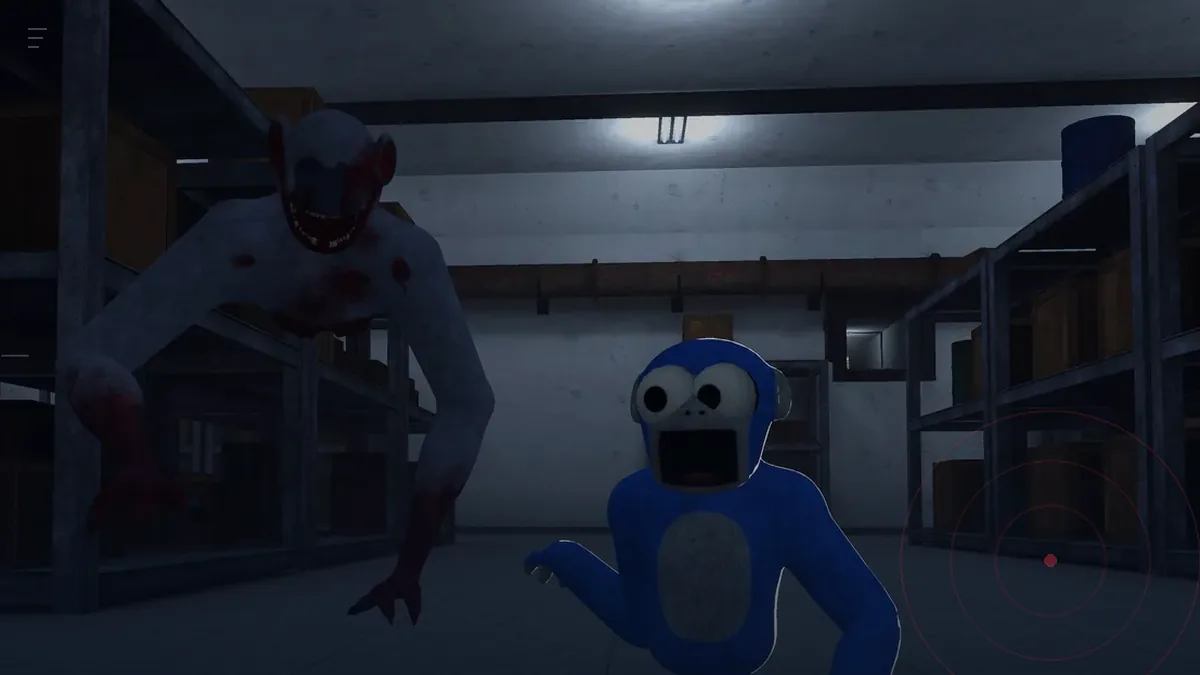
- Any lit hall with the Grinner nearby. It comes to sound, and a fast body is a body arriving. Approach slow, listen, then commit.
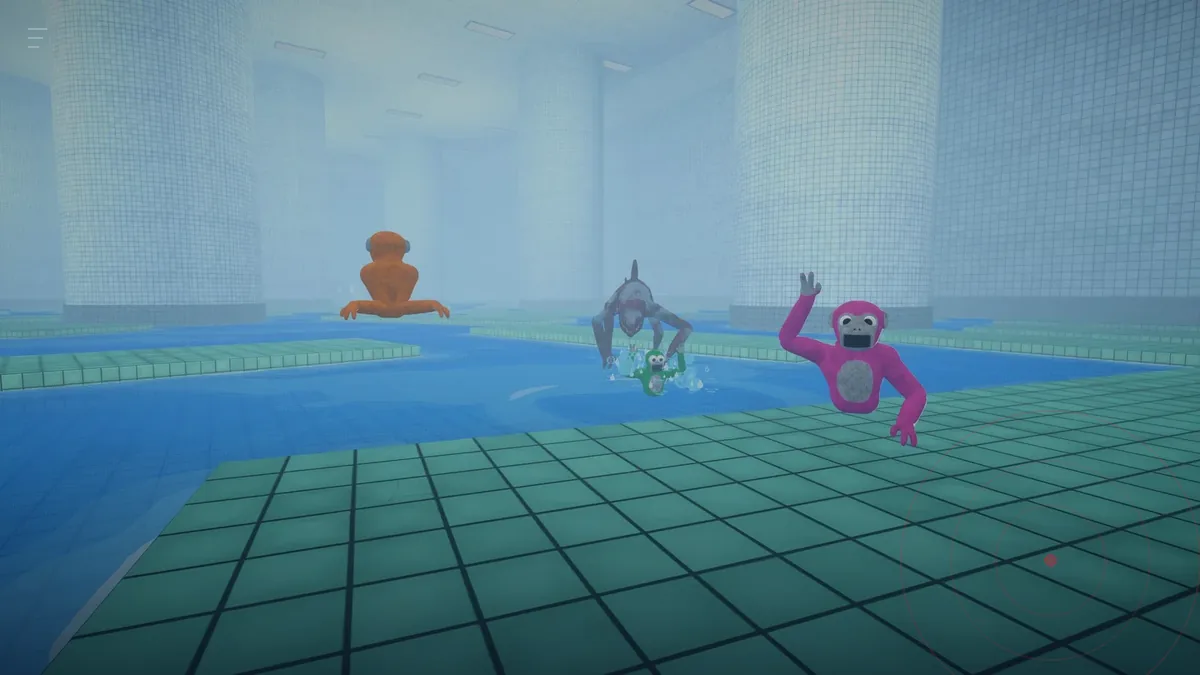
- The flooded hall in Don't Splash. Platform timing punishes speed. Momentum you cannot cancel is momentum that puts you in the water at 24 m/s.
Turning without wrecking your stomach
Snap turning is the usual fix for VR nausea, and it exists in most Quest games for a reason. If GILLA's turning is making you sick, the problem is usually not the movement but the mismatch between what your eyes see and what your inner ear expects.
- Turn with your body, not with a controller, when the room allows it. Physical turning removes the mismatch entirely.
- Keep your head still while you push. A moving camera plus a moving horizon is the double input that gets people.
- Play in shorter sessions at first. Twenty minutes is a real limit for Intense-rated games, not a suggestion.
The room setup that makes all of this easier is in comfort settings. If you can already move and want to know what to do with the speed, go to one full base run.
What the game does not tell you
The store listing does not publish movement speed, acceleration, or whether there is a stamina system, and the developer's pages do not either. Anyone quoting a metres-per-second figure for ape movement is guessing. The only speeds the game itself publishes are the Mako's: 24 m/s, rising to 41 m/s by round seven of Don't Splash.